

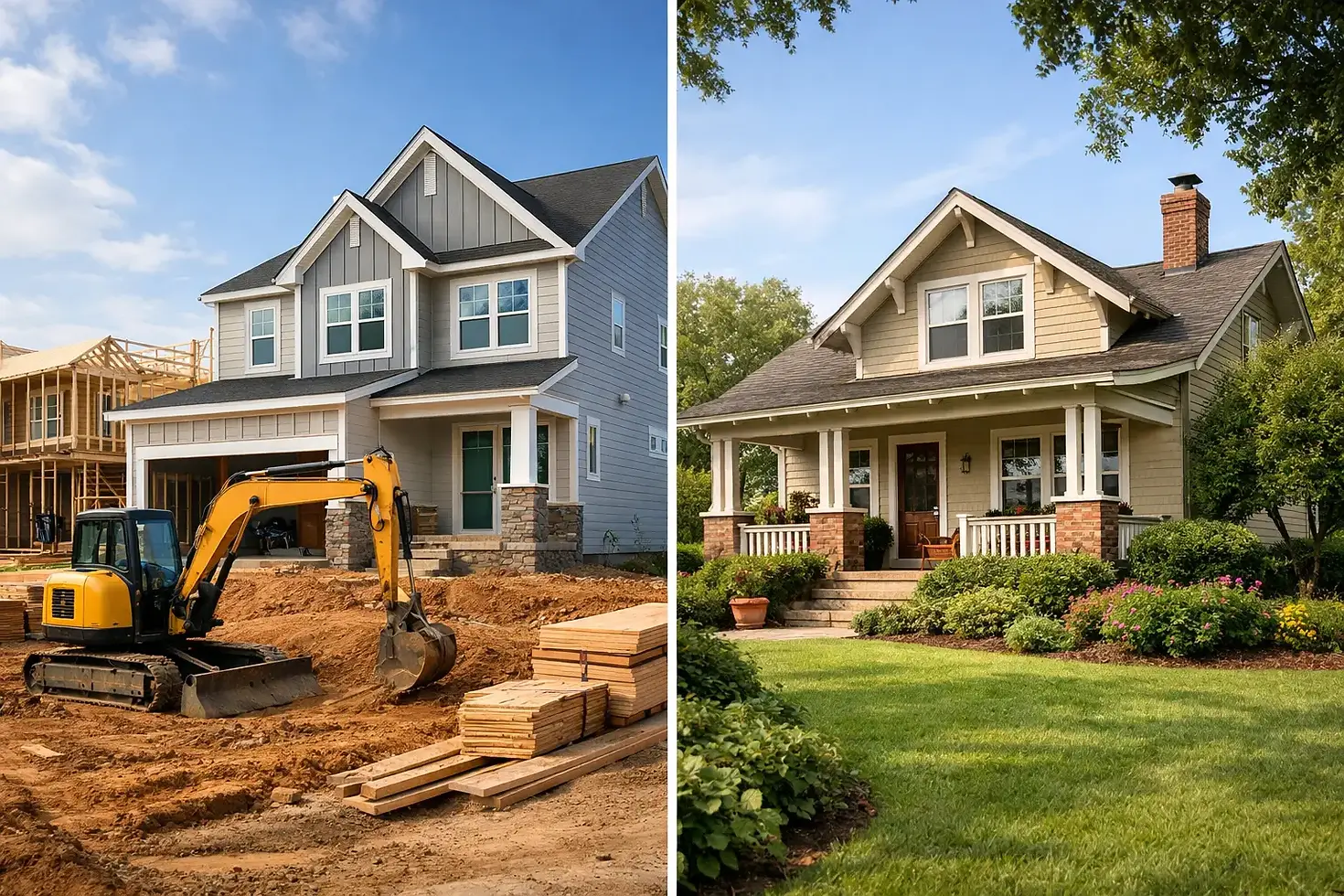
New Construction vs Resale Homes: Which Fits?
- Bill VanWinkle
- 2 days ago
- 6 min read

A brand-new kitchen can be exciting. So can a mature shade tree, a larger yard, and a neighborhood with real character. When comparing new construction vs resale homes, the better choice is rarely about which one is objectively better. It is about what works for your budget, timeline, lifestyle, and comfort level as a buyer.
In Richmond and the surrounding Central Kentucky communities, both options can offer real value. A newly built home may give you modern finishes and fewer immediate repairs. A resale home may put you closer to established schools, employers, parks, or the parts of town you already love. Looking beyond the model-home appeal or the freshly painted walls helps you make a decision you will feel good about long after closing.
New construction vs resale homes: start with your priorities
Before touring homes, decide which trade-offs matter most. If you need to move by a firm date, a completed resale home may be easier to plan around than a home still under construction. If you want a certain floor plan, energy features, or the ability to choose finishes, new construction may be worth the wait.
Your daily life matters just as much as the house itself. Think about commute time, lot size, sidewalks, storage, access to services, and whether you want a neighborhood that is fully established or still growing. A home can check every box inside and still be the wrong fit if the location or monthly payment creates stress.
A clear conversation about your goals at the beginning can prevent a lot of wasted weekends. The right home is not always the newest one or the largest one. It is the one that supports the life you want to live.
The true cost goes beyond the purchase price
It is easy to assume a resale home costs less because its list price is lower, or that a new home is the better value because it should need fewer repairs. Either assumption can miss the full picture.
With new construction, the advertised base price may not include every feature you expect. Premium lots, upgraded flooring, countertops, appliances, lighting, landscaping, fencing, window coverings, and other design selections can add up quickly. Ask for a detailed estimate of what is included, what is optional, and what is likely to be needed after move-in. A builder incentive, such as help with closing costs or a rate buydown, can be valuable, but it should be weighed against the total price and loan terms.
Resale homes can bring a different set of expenses. You may need to budget for a roof that is nearing the end of its life, an aging HVAC system, cosmetic updates, or repairs identified during inspection. On the other hand, a resale property may already have the items buyers often add after purchasing new construction: established landscaping, a deck, blinds, appliances, storage buildings, or a fenced backyard.
The monthly payment deserves the same attention as the sale price. Property taxes, homeowners association dues, insurance, utility costs, and maintenance expectations all affect what a home truly costs to own. Comparing these numbers side by side gives you a much more honest view of affordability.
Do not skip inspections on a new home
New does not mean flawless. Even well-built homes can have issues with grading, drainage, insulation, electrical work, plumbing connections, or unfinished details. A professional independent inspection is a practical way to identify concerns before closing, while there is still time to request repairs or documentation.
For resale homes, an inspection provides context. Not every finding is a reason to walk away. Many homes have ordinary maintenance items, especially in established neighborhoods. The key is understanding which concerns are minor, which are safety-related, and which could affect your budget in the first few years of ownership.
Location and lot can change the equation
One of the biggest differences between a new construction home and a resale home is often outside the front door. New neighborhoods may offer fresh infrastructure, modern streetscapes, and homes with similar architectural styles. They may also be farther from town centers, still under development, or surrounded by ongoing construction for a period of time.
Resale homes are more likely to be in established areas, where you can see how the neighborhood feels on a weekday morning, a weekend afternoon, and after dark. Trees are mature, traffic patterns are familiar, and nearby homes give you a clearer picture of long-term upkeep. In communities such as Richmond, Berea, Winchester, and Irvine, location can have a meaningful effect on convenience, resale appeal, and price.
Lot size is another point worth comparing carefully. A new home may offer a thoughtfully designed layout but a smaller lot or closer neighboring homes. A resale property may have more outdoor space, but it could also bring more yard work and older drainage or retaining features to maintain. Stand in the backyard, check the slope, and picture how you will actually use the space.
Warranties, maintenance, and peace of mind
A builder warranty can be a meaningful advantage of new construction, particularly for buyers who do not want to handle major repairs right away. Still, warranties vary. Some cover workmanship for a short period, while structural coverage may last longer. Read what is covered, what is excluded, how claims are made, and whether maintenance requirements apply.
A resale home typically will not come with a builder warranty, but it may have a strong maintenance history. Sellers can provide valuable information about updates, service records, utility usage, and improvements made over the years. A home that has been cared for consistently can be a very dependable choice, even if it is not new.
Energy efficiency is another area where new homes often stand out. Current building standards, insulation, windows, and HVAC equipment may help lower utility use. But buyers should ask for actual information rather than relying on general promises. Resale homes can also be efficient when owners have replaced windows, added insulation, or updated mechanical systems.
Timing matters more than many buyers expect
A finished new construction home may be ready soon, but a to-be-built home has a schedule that can change. Weather, material availability, permits, inspections, and contractor schedules can affect the completion date. If you are coordinating a lease ending, a job relocation, school enrollment, or the sale of another home, build some flexibility into your plan.
Resale transactions also have timing variables, including inspections, appraisal, financing, title work, and the seller's preferred closing date. The difference is that the home is already standing. You can inspect the exact property you are buying and usually have a more predictable path to possession.
For buyers with a strict deadline, completed new construction and resale homes are often the safest options. For buyers who have flexibility and want to personalize a home from the ground up, a build process may be a good fit.
Negotiation looks different with builders and sellers
A resale seller may be willing to negotiate price, repairs, closing costs, a closing date, or personal property. The amount of flexibility depends on local demand, the home's condition, and the seller's situation. In a competitive market, strong terms can matter as much as a strong price.
Builders may hold firm on the base price to protect values within the neighborhood, but they could offer incentives, upgrades, or help with closing costs. Those offers are not automatically the best deal. It is wise to compare the builder's preferred lender and title options with other choices, then review every incentive alongside the full contract and final numbers.
Builder contracts can differ significantly from standard resale contracts. They may include construction timelines, deposit terms, warranty procedures, change-order rules, and limits on what happens if completion is delayed. Having someone explain the paperwork and advocate for your interests can make the process feel far less overwhelming.
Which type of home is right for you?
New construction may be a strong choice if you value modern design, lower near-term maintenance, energy-efficient features, and the opportunity to select finishes. It can also work well if you are comfortable with a developing neighborhood and have room in your schedule for potential construction delays.
A resale home may fit better if location, established surroundings, larger lots, and move-in certainty are your top priorities. It can also offer more opportunities to see the full character of a property before committing, from the condition of the landscaping to the way natural light moves through the rooms.
Neither path is automatically simpler. New homes require careful review of specifications, upgrades, contracts, and timelines. Resale homes require thoughtful inspection, repair planning, and a realistic understanding of age and condition. Honest advice, local knowledge, and a close look at the details can help you choose with confidence.
The best next step is to tour both types of homes with your real budget and daily routine in mind. Once you can compare actual payments, locations, condition, and timing, the right direction often becomes much clearer.



Comments